

Spain is one of the world’s great wine-producing countries. Together with Italy and France, it forms Europe’s leading trio, although the size of each country’s harvest changes from year to year as drought, heat, frost and rainfall affect the vineyards. For all Spain’s scale and extraordinary diversity, however, many wine drinkers still stop at Rioja.
This Spanish wine guide is here to change that. It’s the short, honest version of what we talk about in our Spanish Wine Masterclass: what to drink, where it comes from and why it tastes the way it does.
No jargon for its own sake, and no need to know a thing before you start. We’ve been teaching people about wine since 1993, and the truth about Spanish wine is that it’s easier to understand than its reputation suggests. Learn a few regions and a handful of grapes, and the whole country begins to open up.




A short history
Wine has been made on the Iberian Peninsula for thousands of years. Phoenician settlements such as Gadir, now Cádiz, connected southern Spain with the wider Mediterranean trading world. The Romans later expanded grape growing and wine production across Hispania.
The story most worth knowing is more recent. During the mid-19th century, pioneering Rioja producers began adopting techniques associated with Bordeaux, including ageing wine in small oak barrels. The later arrival of French merchants and winemakers escaping the effects of phylloxera accelerated Rioja’s development.
From the late 20th century onwards, modern equipment, temperature-controlled fermentation and a new focus on individual vineyards transformed Spanish wine. Priorat’s revival began at the end of the 1980s, Galicia’s white wines reached a wider audience, and growers began to recognise the value of old vineyards that had previously been overlooked.
Old roots, modern hands. That’s Spain now.
How Spanish wine is classified
Spanish wine labels tend to lead with the place rather than the grape, so a little knowledge of the system saves a lot of guesswork.
- Vino — wine without a protected geographical indication.
- Vino de la Tierra — wine carrying a protected geographical indication, or IGP, and linked to a broader regional area.
- DO (Denominación de Origen) — the most familiar protected-origin designation. The grapes and wine must meet the rules of a defined production area. Spain currently has around seventy DOs.
- DOCa or DOQ — Denominación de Origen Calificada in Spanish and Denominació d’Origen Qualificada in Catalan. Only Rioja and Priorat currently hold this designation.
- Vino de Pago — a protected designation for an individual estate with distinctive soils, climate and winemaking. It is a separate type of protected designation, not simply a step above DOCa in a national quality ladder.
Cava is an unusual DO because its permitted production area is spread across several geographically separate parts of Spain. What unites the wines is their protected origin, authorised grapes and production by the traditional method, with the second fermentation taking place in the bottle.
The ageing terms found on some Spanish labels also need a little care. Joven generally describes a young wine with little or no maturation in oak, but it is not a universal indication of quality. Crianza, Reserva and Gran Reserva are regulated ageing terms, although the precise requirements depend on the appellation, wine colour and style.
Longer ageing does not automatically make one wine better than another. It simply creates a different style.
The indigenous grapes to know
Learn these and most Spanish wine lists stop being a mystery.
Reds
- Tempranillo — Spain’s most famous red variety and a quiet shape-shifter. It is known as Tinto Fino or Tinta del País in Ribera del Duero, Tinta de Toro in Toro and Cencibel in parts of central Spain. It commonly gives red- and black-fruit flavours and takes well to oak ageing.
- Garnacha — known as Grenache in France. It can produce everything from juicy, generous everyday reds to complex wines from old, low-yielding vines.
- Monastrell — known internationally as Mourvèdre. This late-ripening variety is well adapted to the hot, dry conditions of south-eastern Spain and is particularly important in Jumilla.
- Mencía — the principal red grape of Bierzo and an important variety elsewhere in north-western Spain. It can produce fresh, fragrant wines with red-fruit, floral and peppery notes.
- Graciano and Mazuelo — traditional Rioja varieties often blended with Tempranillo. Graciano can contribute aroma and acidity, while Mazuelo, known elsewhere as Cariñena or Carignan, can add colour, acidity and tannin.
Whites
- Albariño — the leading grape of Rías Baixas. It produces dry, aromatic wines with naturally fresh acidity and is a classic partner for seafood.
- Verdejo — Rueda’s signature variety, known for fresh fruit, herbal aromas and a characteristically gentle bitter note on the finish.
- Godello — an important white grape in north-western Spain, particularly in Valdeorras and Bierzo. Styles range from fresh and mineral to fuller, textured wines capable of ageing.
- Viura, Xarel·lo and Parellada — important white varieties in Spain. Macabeo, the name generally used in Catalonia and in Cava, is the same variety as Viura. Macabeo, Xarel·lo and Parellada form the classic Cava blend.
- Palomino, Pedro Ximénez and Moscatel — the three authorised Sherry varieties. Palomino is the foundation of dry styles such as Fino, Manzanilla, Amontillado and Oloroso, while Pedro Ximénez and Moscatel are associated particularly with naturally sweet wines.
Spanish wine regions
This is the part that matters most, and the part the shelf rarely explains. Spain is divided by mountain ranges, river valleys and a high central plateau. Its vineyards are shaped by Atlantic, Mediterranean and continental influences, as well as major differences in altitude.
Understand the geography and you’ve half-guessed the wine. Here are the regions to know first.
Rioja — start here
Rioja is Spain’s best-known wine region and a fair place to begin. It lies in northern Spain along the River Ebro and is divided into three zones: Rioja Alta, Rioja Alavesa and Rioja Oriental.
Red Rioja is based predominantly on Tempranillo, often supported by Garnacha, Graciano and Mazuelo. Oak ageing has long been central to the region’s identity, contributing the vanilla, spice, leather and savoury notes associated with traditional Rioja.
Broadly speaking, Rioja Alta and Rioja Alavesa are associated with cooler conditions and more restrained styles, while the warmer Rioja Oriental can produce riper, fuller wines. These are useful generalisations rather than fixed rules: vineyard altitude, soil, vintage and winemaking all matter.
The ageing category provides another clue. Crianza, Reserva and Gran Reserva indicate progressively longer minimum periods of maturation, but they are descriptions of ageing rather than simple scores of quality.
Rioja also makes white wine, with Viura its most widely planted white variety. Styles range from fresh, young whites to complex barrel-aged wines capable of developing for many years.
Rioja was Spain’s first DOCa and remains one of only two regions to hold the country’s qualified designation.
Ribera del Duero
Ribera del Duero lies on a high plateau in Castilla y León. Its climate is strongly continental, with dry summers, long cold winters and pronounced temperature differences between day and night.
The main grape is Tempranillo, known locally as Tinto Fino or Tinta del País. Compared with traditional Rioja, Ribera del Duero commonly produces darker, more structured wines with pronounced black-fruit flavours and firm tannins. Cabernet Sauvignon, Merlot, Malbec and Garnacha Tinta are also authorised and may appear in blends. Some producers in the wider area work with Syrah, or Shiraz, but it is not currently an authorised Ribera del Duero DO variety, so wines containing it fall outside the DO specification.
The region received its DO in 1982. It now produces young reds as well as Crianza, Reserva and Gran Reserva wines, together with smaller quantities of rosé and white wine. Albillo Mayor is its principal authorised white variety.
If traditional Rioja is the charmer, Ribera is the heavyweight — although good producers in both regions can deliver power, freshness and finesse.
Rías Baixas
Rías Baixas lies in green, Atlantic-influenced Galicia in north-western Spain. Its soils are dominated by granite, with schist and alluvial material in some areas.
Rainfall and humidity are important features of the climate. Vines have traditionally been trained high on a pergola system known locally as a parra, often supported by granite posts. This improves air circulation around the grapes and helps reduce the risk of fungal disease.
Albariño is by far the region’s leading variety. A wine labelled Rías Baixas Albariño must be made entirely from Albariño, although the DO also permits other local white and red grapes in specified wine styles.
The classic profile is dry, aromatic and fresh, frequently showing citrus, stone fruit and saline or mineral impressions. It is a natural match for Galicia’s fish and shellfish.
Priorat
Priorat is a small, mountainous region in Tarragona province, Catalonia. It is the only Spanish region besides Rioja to hold the qualified DOQ or DOCa designation.
Its best-known soil is llicorella, a brittle mixture of slate and quartz. Vineyards are frequently planted on steep slopes, and yields can be very low. Garnacha and Cariñena are the region’s two most important traditional red varieties.
Priorat is known for concentrated, structured and age-worthy reds, although styles vary according to altitude, vineyard position and winemaking. The region suffered heavily following phylloxera and rural depopulation, before a modern revival began at the end of the 1980s.
Rueda
Rueda, in Castilla y León, specialises in white wine. Its signature grape is Verdejo, although other varieties are also authorised.
The best-known style is fresh and dry, commonly fermented in temperature-controlled stainless steel to preserve fruit and aroma. Verdejo’s citrus, orchard-fruit and herbal character is often accompanied by a subtle bitter note on the finish.
Rueda also produces more textured styles through lees ageing, barrel fermentation and other methods. It is one of Spain’s most dependable regions for accessible, refreshing white wine.
Toro
Toro lies west of Ribera del Duero in Castilla y León. Its principal red grape is Tinta de Toro, the local name for Tempranillo.
The region has an extreme continental climate, and many vineyards grow on poor, sandy, stony or clay-based soils. Toro has traditionally been associated with deeply coloured, powerful red wines, but the region is not limited to one style. Modern producers increasingly combine concentration with fresher fruit and more controlled extraction.
These are wines that work well with robust food, particularly grilled and slow-cooked meat.
Penedès and Cava
Penedès lies mainly to the south-west of Barcelona and is the historic heartland of Cava. The town of Sant Sadurní d’Anoia remains closely associated with its production, although the Cava DO also includes permitted areas elsewhere in Spain.
Cava is made by the traditional method, meaning that its second fermentation takes place in the bottle. The classic grapes are Macabeo, Xarel·lo and Parellada, although the DO permits several others.
The main ageing categories are:
- Cava de Guarda — aged for a minimum of nine months.
- Cava de Guarda Superior Reserva — aged for at least 18 months.
- Cava de Guarda Superior Gran Reserva — aged for at least 30 months.
- Cava de Guarda Superior de Paraje Calificado — from a recognised site and aged for at least 36 months.
Cava de Guarda Superior is subject to additional vineyard, vintage and traceability requirements. From the 2025 harvest onwards, grapes used for this category must be organically grown.
Good Cava can be fresh, complex and exceptionally versatile at the table.
Jerez and Sherry
Sherry country lies in Andalucía in Spain’s far south-west. The traditional production area centres on Jerez de la Frontera, El Puerto de Santa María and Sanlúcar de Barrameda, where the vineyards are known for their brilliant white albariza soils.
Sherry is usually fortified, but fortification is no longer compulsory when a wine naturally reaches the minimum alcoholic strength required for its intended style. That change was introduced through updated regulations published in 2022.
The main dry styles are:
- Fino — made from Palomino and aged biologically beneath a layer of yeast called flor.
- Manzanilla — biologically aged under flor in Sanlúcar de Barrameda and protected by its own designation of origin.
- Amontillado — begins with biological ageing under flor before continuing with oxidative ageing.
- Oloroso — aged oxidatively, without the protection of flor.
Pedro Ximénez and Moscatel produce intensely sweet styles, while other sweet Sherries are made by blending sweet and dry wines.
Sherry is commonly matured through the criaderas and solera system, in which younger wine is progressively blended with older wine. It remains one of the most varied and misunderstood wine categories in the world.
A properly chilled Fino with a plate of jamón is a very good place to start.
Jumilla — the one to watch
Jumilla lies in south-eastern Spain and crosses two provinces: Murcia and Albacete. Its defining grape is Monastrell, which accounts for most of the appellation’s vineyard area.
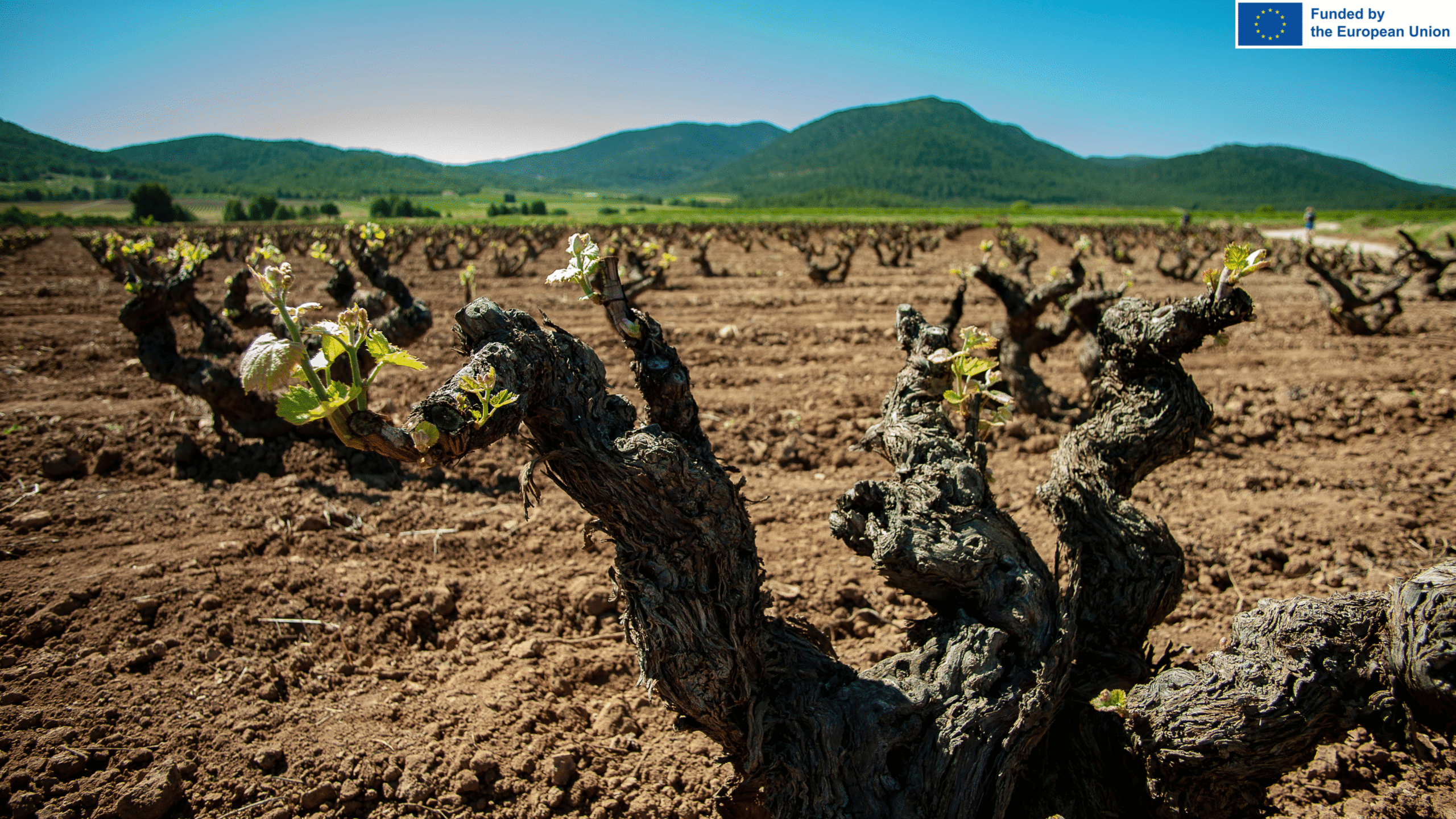
The region is hot, dry and sunny, with predominantly limestone soils. Much of the vineyard is dry-farmed, and many vines are traditionally trained as low bush vines. Jumilla also retains a significant area of old and ungrafted vines.
Monastrell is particularly well adapted to these conditions. It can produce deeply coloured, structured wines with ripe fruit, but careful vineyard and cellar work can preserve freshness as well as power.
It’s a region we teach and genuinely champion, and a smart place to explore once the better-known classics feel familiar.
Bierzo
Bierzo lies in western Castilla y León, close to the border with Galicia. Its vineyards occupy a mixture of valley floors, hillsides and steeper slopes, with soils that include slate, clay and alluvial material.
Mencía is the region’s principal red variety. It can produce fragrant, fresh and medium-bodied wines as well as more concentrated, age-worthy examples. Godello is increasingly important for white wine.
Bierzo is good proof that Spanish red wine is not defined solely by power and oak.
Spanish wine and food
Spanish wine developed as part of the country’s food culture, and regional pairings are often a useful place to begin.
- Albariño with seafood — particularly shellfish or pulpo a la gallega, Galician octopus seasoned with paprika and olive oil.
- Rioja with roast lamb, jamón or firm sheep’s cheese.
- Ribera del Duero and Toro with grilled meat, game and slow-cooked dishes.
- Cava with tapas, fried seafood and other salty foods. Its acidity and bubbles also make it useful across a wider meal.
- Fino and Manzanilla with almonds, olives, seafood and jamón.
- Pedro Ximénez with blue cheese, chocolate desserts or vanilla ice cream.
These are starting points, not laws. The weight, sweetness, acidity and intensity of the individual wine matter more than the name of the region alone.
A few producers worth knowing
Useful names across the classic regions include López de Heredia, Marqués de Murrieta, CVNE and Ramón Bilbao in Rioja; Vega Sicilia in Ribera del Duero; Pazo de Señorans in Rías Baixas; Álvaro Palacios in Priorat; and González Byass, producer of Tío Pepe, in Jerez.
Treat them as landmarks rather than a complete shopping list. The real fun is finding your own favourites, and the fastest way to do that is to taste widely and write down what you like.
Spanish wine: your questions answered
What grape is Rioja made from?
Red Rioja is based mainly on Tempranillo, often supported by Garnacha, Graciano and Mazuelo. White Rioja is most commonly based on Viura, although several other white varieties are authorised.
Is Spanish wine dry or sweet?
Most Spanish still table wines are dry. Spain also produces sparkling wines and fortified or naturally sweet styles across a range of sweetness levels. Sherry alone runs from bone-dry Fino and Manzanilla to intensely sweet Pedro Ximénez.
What is the most famous Spanish wine?
Rioja is Spain’s best-known wine region internationally. Cava and Sherry are also recognised around the world, while Ribera del Duero has established a formidable reputation for premium red wine.
Which Spanish wines are best for beginners?
A Rioja Crianza, Albariño from Rías Baixas, Verdejo from Rueda or a good Cava can all provide an accessible introduction. The best starting point depends on whether you prefer red, white or sparkling wine.
Buying Spanish wine: a quick cheat sheet
Faced with a shelf and short on time, this is roughly how we’d point you:
- A good-value midweek red — a young Garnacha, Rioja Crianza or Monastrell from Jumilla.
- Something more mature — Rioja Reserva or Gran Reserva.
- A fuller red — Ribera del Duero or Toro.
- A white for a warm day — Albariño or Verdejo.
- A celebration — traditional-method Cava, properly chilled.
- Something different — Mencía from Bierzo or Godello from north-western Spain.
- Before dinner — chilled Fino or Manzanilla.
- After dinner — a small glass of Pedro Ximénez.
Taste it with us
Reading about wine only gets you so far — the rest happens with a glass in your hand.
Our Spanish Wine and Tapas Masterclass takes you through Spain’s key regions, grapes and wine styles, accompanied by Spanish-style tapas chosen to complement the wines.
It’s relaxed, practical and experience-led. No previous wine knowledge is needed — just turn up curious.